
 Image 1 of 1
"Part of the exhibition “LA+003 | Malima + Numbulwar" This artwork is to be collected at LaPerouse Museum, Sydney in February 2027."
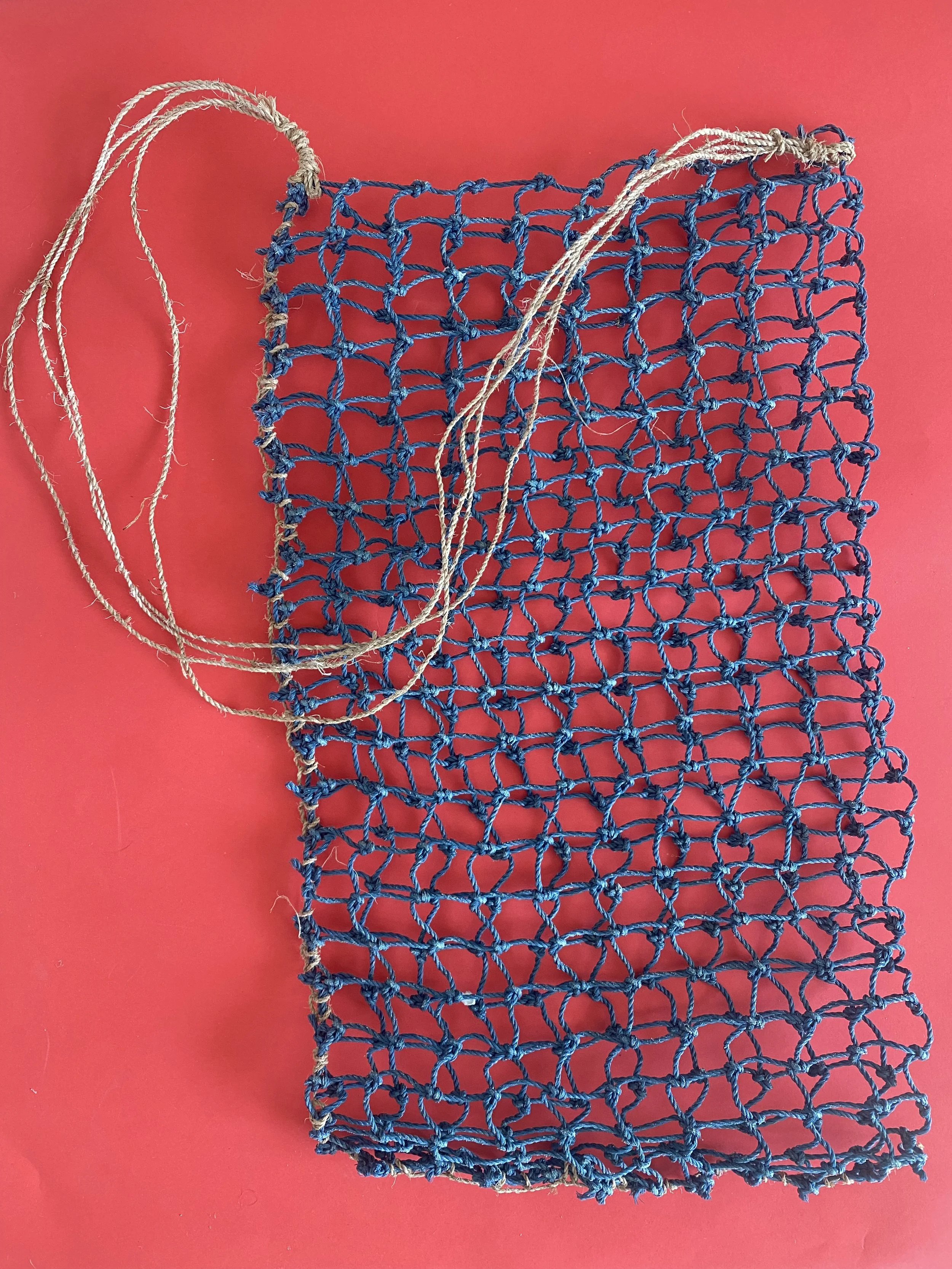
Nunggayinbala people have used dilly bags for thousands of years for practical and ceremonial purposes, but not until recently were they made from repurposed ghost nets and shade cloth fabric. Dilly bags, or “yir” in Nunggubuyu language, were traditionally made from pandanus or bark, and painted using different shades of ochre. Numbulwar artists have taken tradition to the next level by replicating the forms using found, contemporary materials that speak to the environmental deterioration of their homelands. Brightly coloured acrylics replace ochre stripes for clan identification and individual expression.
Materials: Reclaimed Ghost netting
Dimensions: 8 × 35cm
Cat no: 274-26
"Part of the exhibition “LA+003 | Malima + Numbulwar" This artwork is to be collected at LaPerouse Museum, Sydney in February 2027."
Nunggayinbala people have used dilly bags for thousands of years for practical and ceremonial purposes, but not until recently were they made from repurposed ghost nets and shade cloth fabric. Dilly bags, or “yir” in Nunggubuyu language, were traditionally made from pandanus or bark, and painted using different shades of ochre. Numbulwar artists have taken tradition to the next level by replicating the forms using found, contemporary materials that speak to the environmental deterioration of their homelands. Brightly coloured acrylics replace ochre stripes for clan identification and individual expression.
Materials: Reclaimed Ghost netting
Dimensions: 8 × 35cm
Cat no: 274-26